About us
At Limina, we are a full-service company dedicated to supporting the education and training sector with innovative, impactful solutions. From designing immersive learning experiences to delivering tailored services, we aim to open opportunities for all and inspire meaningful change.
Our agile, collaborative approach ensures that every project is contextually relevant and actionable. By working closely with stakeholders, we develop dynamic solutions—whether courses, platforms, or resources—that captivate, engage, and empower learners to achieve their full potential. Together, we’re shaping a future of life-long learning, growth, and success.
Official Moodle™ Certified PartnerWe’re proud to be one of only four companies in Africa accredited as a Certified Moodle Partner. This global recognition from Moodle HQ confirms Limina’s proven expertise in delivering secure, scalable, and fully customised learning management systems using Moodle. Whether cloud-based or offline, our solutions meet the highest international standards—combining technical excellence with deep contextual understanding across sectors. When you partner with Limina, you’re partnering with a trusted Moodle expert.

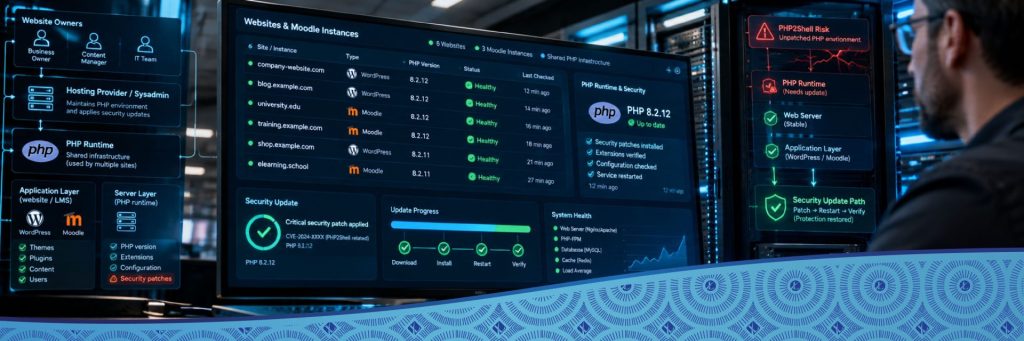
A fully managed LMS — without the technical burden
Limina delivers a complete, supported Learning Management System, ready to use.
We handle:
– LMS setup and configuration
– Secure hosting and technical management
– Ongoing monthly support
There are no setup fees — you pay one simple monthly fee.
You get a reliable LMS that works from day one, without needing in-house technical expertise.
Our packages are built on Moodle, one of the world’s most trusted learning platforms.
Picture Sam and Stanley opening the same Moodle course on the same morning.
Sam clicks around, figures out the navigation, finds the activity, and gets on with it. He’s slightly irritated by the clunky layout, but he manages to complete the course quickly.
Stanley opens the course, can’t immediately find where to start, clicks something that doesn’t seem right, backs out, opens WhatsApp to ask Sam, gets no reply, tries a different button, lands somewhere unfamiliar, and closes the tab. Stanley believes he’ll try again later but later eventually becomes never.
The same course and content can have completely different outcomes, but in your analytics, both learners look identical, right up until one of them stops showing up entirely.
The Gap Nobody Sees Opening
We talk a lot about the learning gap in terms of access – who has a device, who has data, who has enough uninterrupted time. These things matter enormously.
Angie is working remotely from home. She opens her Moodle module with genuine good intentions. She’s made tea. The house is finally quiet. She is, for perhaps the first time today, ready to learn.
Then, seven-year-old Katie appears in the doorway, looking pale. A forehead check, a glass of milk, a hug, and then another forehead check to be sure. By the time Angie comes back to her desk, her tea is cold, the mental thread is gone, and the course is sitting exactly where she left it.
If interruptions are completely normal – and they are – why are we still designing courses that ignore our very real fast and fragmented or FaF lives?
Interruptions Are More Expensive Than They Look
Every time a learner is pulled away and comes back, they have to reorient themselves from scratch. They must find where they were, recover their context, and remember why they were doing this in the first place.
Somewhere in Cape Town, Lindy is sitting waiting outside a client’s office. With eight minutes before her to spare, she opens her phone, finds the compliance course she’s been meaning to finish for two weeks, watches four minutes of a video, and closes it when the client comes around the corner. ‘I’ll come back to it later’, she thinks. She always means to.
Three days later, she reopens the course. The progress indicator is vague, and she can’t remember exactly where she left off. The module feels longer than she remembered, and there seems to be far more tasks to do now. With her to-do list already a page long, she closes the course again, this time with a small but familiar sense of defeat.
Lindy isn’t a distracted employee. She’s having to use a learning system that wasn’t designed for the fast and fragmented (FaF) life she’s actually living, and the work demands she navigates every day.