


06 Apr Week 7 in our biome series: Lessons from the Shoreline
Week 7 in our biome series: Lessons from the Shoreline.
I can smell it now, the sea spray-mix of fish, sand, dune bushes and rocky mosses.
It reminds me of childhood with handlines and nets, the hats we had to wear when adults were watching and sticky sunblock as we searched under boulders for the elusive octopus in the rockpools. Magical moments spent in the salty water, among creatures who defy all odds not only to survive, but thrive.
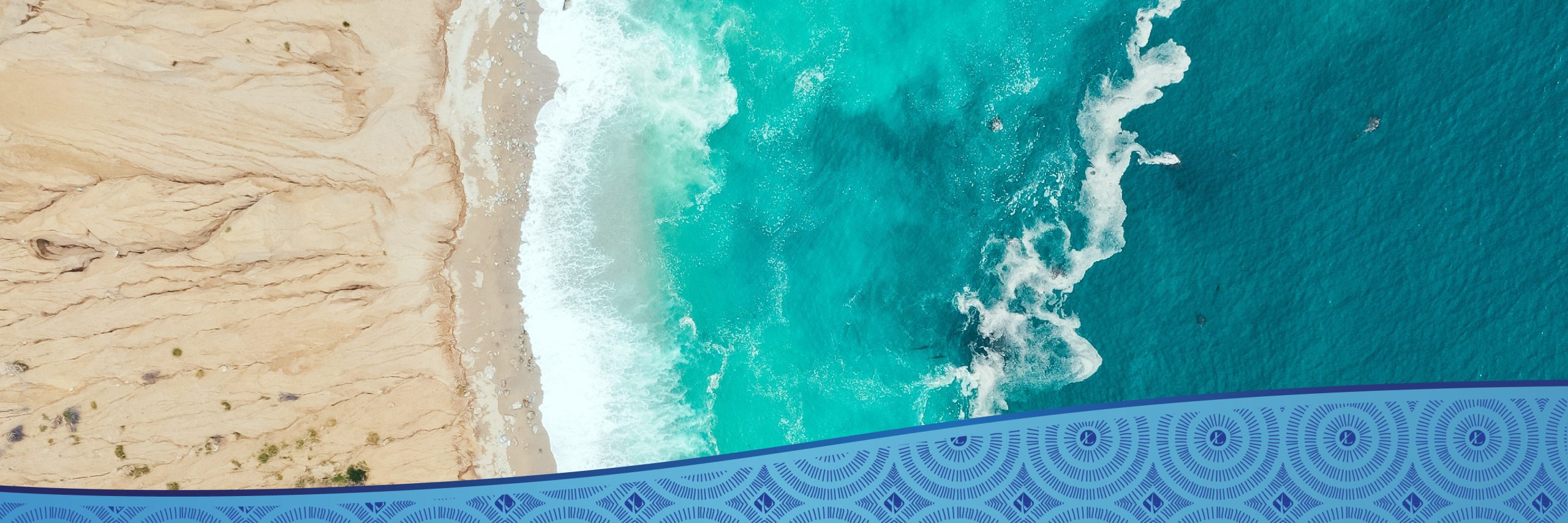
South Africa has one of the longest and most diverse coastlines in the world. Waves arrive in a steady rhythm, rolling in and pulling back again. Tides rise and fall. Sand shifts constantly under your feet. Storms reshape the coastline, and quiet days smooth it out again. Nothing here is ever completely fixed.
Yet shorelines are among the most productive ecosystems on Earth. Life thrives in this narrow strip where land meets ocean. Tidal pools shelter delicate marine life, and coastal vegetation stabilises dunes against wind and erosion. Birds, fish and plants all depend on the constant exchange between sea and land. The shoreline works because it is a place of vivid interaction where two powerful systems meet, but neither dominates the other. Rather, both shape the space between them.
In ecology, this kind of meeting place between systems is known as a boundary zone.
Many learning ecosystems operate in similar boundary zones. Technology meets pedagogy, where educators translate teaching ideas into digital course spaces. Institutions meet learners through the structures that organise programmes, support participation and recognise achievement. Formal training overlaps with informal learning when people apply new knowledge in their daily work. In these same spaces organisational systems meet human capability, shaping how people learn, teach and perform.
When these boundaries are poorly designed, friction appears quickly.
Platforms become isolated from teaching practice. Learning activities start to feel disconnected from the realities of the workplace, and reporting systems end up tracking clicks and course completions rather than actual learning. Like a damaged coastline, the learning ecosystem becomes unstable.
However, healthy ecosystems handle these boundaries differently.
They allow movement between systems, where information flows easily between participants, and technology supports learning rather than obstructing it. Just as tidal zones support life by enabling constant exchange between land and sea, digital learning ecosystems thrive when the connections between their systems are carefully designed.
Course structures connect directly with reporting, so that assessments, activity and learner progress are visible in the same place. Learning activities link to real organisational goals, rather than existing as isolated course tasks. Educators, administrators and learners interact through clear and predictable pathways that feel predictable and easy to follow.
In strong learning ecosystems, boundaries help people understand how to move through the system. They shape the flow of learning rather than interrupt it.
The shoreline teaches us that productive ecosystems rarely exist in isolation. They exist where systems meet, interact and reshape one another over time.
In your learning ecosystem, where are the shorelines?
And are those boundaries enabling movement – or preventing it?
By Dr Isabel Tarling