


27 Apr When Learning Ecosystems Start to Grow: What Nature Teaches Us About Messy Middle Stages
When Learning Ecosystems Start to Grow: What Nature Teaches Us About Messy Middle Stages
(Part 2)
As you’ve probably realised by now, our Liminaires team love learning from nature, especially when we want to make sense of what happens inside learning systems.
In this last instalment of the series, we continue the thinking about ecological succession to understand what happens once growth begins.
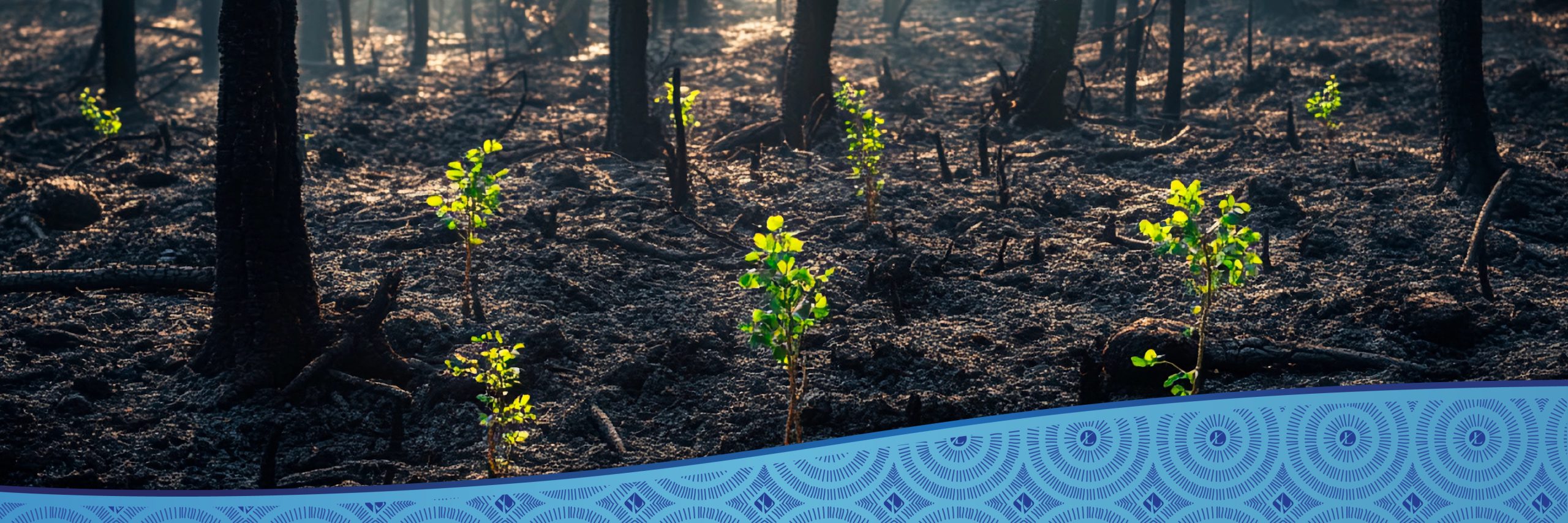
In nature, the recovery season after a burn or flooding starts with the pioneer stage which is followed by a middle stage, that time between a new and established ecosystem. This middle stage is when the first hardy plants have stabilised the soil, and made space for other species to return. Shrubs of all kinds spread, attracting a variety of insects and small animals. Layers begin to form, one building on another. Different species take hold in different areas, each responding to its own conditions.
Growth at this stage is dense, overlapping, and sometimes difficult to make sense of. For the first time plants start to compete for space and light, and while some thrive, others fall away. The landscape begins to change more quickly, and not always in predictable ways. It’s messy in the middle, but it is a natural and necessary part of ecological succession.
What this looks like inside learning systems
Learning ecosystems inside organisations often move through a very similar phase. After those early stages, where a few courses are introduced, and the system begins to stabilise, growth tends to accelerate. More programmes are added, and different teams begin to use the platform. New requirements emerge, often at the same time.
At first, this feels like progress, and it is, but over time, course lists grow longer, classes increase in size and number, and structures begin to vary between departments. Naming conventions shift slightly depending on who created what. Reports still work, but they require a bit more explanation than before.
It is not immediately obvious that anything is wrong since everything is still there and still functions. It just takes a little longer to find, to understand, and to trust how the system operates in the messy in-between stage.
The stage most organisations recognise
The messy middle is a very recognisable stage for many organisations. It shows up in the moments when you can’t find a course because naming conventions across departments differ, or you struggle to pinpoint the correct or latest version of the course; or when a report is presented, but you have to spend a few red-faced minutes explaining how to read it.
Each decision made along the way is usually reasonable: another similar-but-different course was created to meet a need, or a department structures its content in a way that makes sense to them, but it doesn’t make much sense to everyone else. Over time, these decisions begin to pile up. The system expands, and it becomes more difficult to navigate and understand.
Even though it might feel messy, these are signs of growth! Similar to ecosystems that become complex as they grow, learning systems become more complex as they’re used. More activity means more people are involved which creates more structures, but not always in a coordinated way.
This is often the point at which organisations begin to feel that something needs to be fixed. It isn’t the system’s fault but it does mean that change is needed, and this is where the next stage of development should begin.
After the messy middle
In ecological succession, the messy middle stage leads to a phase in which patterns begin to stabilise and relationships between species become more defined. Overall, the system doesn’t become simpler, but it becomes more balanced. Movement through the environment becomes easier, even as it stays rich and complex.
Learning ecosystems go through a similar experience after the messy middle’s wild growth period. If designed with a systems-thinking approach, the same course structures may start appearing in different areas and content begins to follow patterns that make it easier to navigate across departments. Even reports start to reflect how people are actually using the system and give feedback from across the systems (that don’t need to be explained each time!). To move from the messy middle to a more stable learning ecosystem, the LMS most often doesn’t need a complete redesign. It does need a small team to provide structure and guidance for the restructuring, to help define, balance, and steer content, and to provide navigation and roadsigns to structure the user’s journey as it continues to grow and evolve.
What this stage actually needs
What the learning ecosystem needs at this stage is a bit more coordination, so that growth begins to settle into patterns that people can follow more easily and intuitively.
Restructuring the LMS can look like:
- Courses being regrouped so that similar programmes sit together, instead of being scattered across long lists.
- Older versions are removed, merged, or archived, so people are not choosing between three courses that all sound almost right.
- Departments use similar layouts or course shells, so moving from one course to another feels more familiar.
- Naming becomes more consistent, which means people spend less time working out what they are looking at across the LMS.
- Reports are shaped around the questions people are actually asking, instead of needing a meeting to explain what the data says.
Healthy ecosystems move through the messy middle stage, allowing growth to happen, while gradually introducing the conditions that make that growth sustainable. Learning ecosystems are no different.
The challenge is not to prevent complexity from emerging, but to recognise when the system has reached the point where it needs a little more structure to support what’s already taking place. The middle of succession is inherently messy, often unruly and most definitely busy because of the rapid growth in people using the system. With the right systems thinking and structures, the messy middle can make space for a more stable and structured learning ecosystem – it just needs a small team to coordinate the process, and huge measures of patience!
By Dr Isabel Tarling