



01 Jun The Adaptive Learner: When Learning Stops Being One-Size-Fits-All
The familiar ta-dummm opens the platform. You look at the screen but can’t find the series you’re watching. Instead, the lineups are all C-grade action movies, history documentaries, and Bear Grills reruns. The panic is real, until you realise: it’s your son’s profile! Ahhhh, relief!
Netflix doesn’t show everyone the same thing. It watches what you watch, what you skip, and what you linger on, then reshapes what comes next. The catalogue stays the same but the path through it changes with every choice.
That’s the basic premise of individualised adaptive learning at its best.
What Is Adaptive Learning?
Training traditionally follows a fixed playlist: one course, one sequence, delivered to everyone at the same time. Since not everyone learns in the same way or at the same pace, a one-size-fits-all approach often results in low completion rates, frustrated learners, and trainers manually reassigning people to remedial or advanced tracks.
Adaptive learning is a tool we use to solve this challenge. On an LMS, you can pre-set rules regarding quiz scores, time spent and activity completion, to guide what learners see next in their learning pathway. A low quiz score could trigger a review module. A quick finish with high quiz scores could unlock a deeper challenge. Learners can move through different paths by revisiting key concepts or progressing ahead.
In a Moodle LMS, you can set these as conditional activities. If a learner passes a quiz, they move forward; if they struggle, they loop back and you can add extra support. There’s no coding or daily tweaks needed since the system simply follows the structure you’ve already put in place.
The Cost of Assuming Sameness
Without adaptive learning, your LMS can become a one-size-fits-all catalogue, rather than a responsive and adaptive Netflix-style learning guide. Because the platform assumes everyone starts and progresses from the same place, the cost in wasted hours and frustrated learners can become very high.
Instead, clever learning design basics using the tools built into the Moodle LMS allows you to adapt the learning to the students’ needs. The same basic content can then serve many needs.
What It Looks Like in Practice
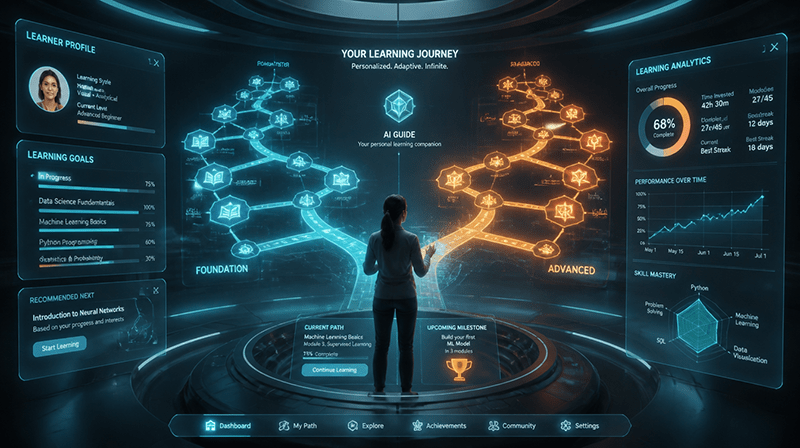 A team of twenty might include five people who’ve used the LMS system for years, eight who have never even logged in, and seven somewhere in between. One course, built adaptively, can serve all three without the trainer having to manage three separate tracks.
Learners log in and move forward as they’re guided through the system. Trainers check their dashboard: green paths for most, yellow flags for a few who are looping back for extra support and blue paths for those speedy learners who want to dig deeper into the topic. Nobody asks “what’s next?” because the platform has already helped them move on.
This adds a particularly useful tool to trainers in learning contexts across Africa where bandwidth and connectivity access varies, and training groups generally represent a mix of novices with experienced users. Using these adaptive learning concepts, trainers can purposefully design content with varying bandwidth in mind, so learners with intermittent or fluctuating internet access aren’t penalised by heavy media or long load times. More specifically, they can design learning using Moodle’s native tools so students can access this on the app offline, and sync their progress when they are connected to the internet.
Adaptive learning on Moodle lets you set the rules up front and then the LMS does the rest. Over time, quiz scores and completion data reveal where learners are getting stuck and where the course itself may need adjustment. This means the learning content is reviewed periodically but does not need to be managed daily. In this way adaptive learning becomes less about technology and more about managing the complexity of learning while removing heavy administrative burdens from trainers and organisations.
The best part of being on the right Netflix profile is that everything just makes sense. That’s what adaptive learning is supposed to feel like – a course that already knows where you are and where you need to go next, that just makes sense as you work through it.
Ready to guide learning, not just store it?
If you’re exploring how adaptive learning could work within your organisation, Limina can help you design Moodle learning environments that support different learner journeys more clearly, reduce administrative complexity, and make large-scale learning systems easier to manage over time.
You can also explore our upcoming resources on adaptive learning pathways, learner engagement, and learning-system design, or book a conversation with us to discuss how this could work in practice within your learning environment.
By Dr Isabel Tarling