


25 May The Weight of History: When Your LMS Has Outgrown Its Original Design
The Weight of History:
When Your LMS Has Outgrown Its Original Design
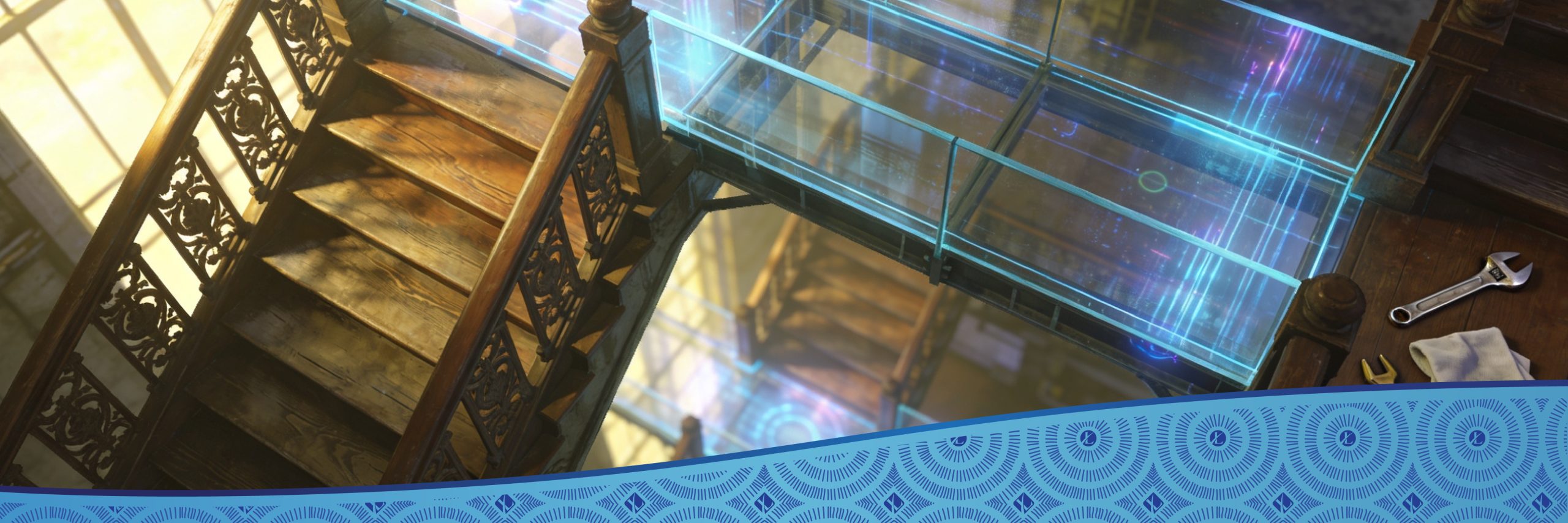
Picture a grand heritage building in the centre of town: sandstone weathered to a soft gold, brass handrails polished by generations of passing hands, tall windows casting long bands of light across floors that have carried thousands of footsteps.
It still stands with presence. It still serves its purpose. Yet every corridor, staircase, and partition tells a story of change. A doorway opens where it made sense half a century ago, and passages are narrowed because new rooms were carved out later. An office sits in what was once a drawing room because the building kept adapting to the life it housed.
Now, consider what it takes to keep that building usable in modern life.
You can’t strip it back to its original design without consequence. Too much depends on what has been added over time. Each alteration, every wall, every extension, every repurposed space solved a problem when it was introduced. Remove one, and something else is affected. So the building isn’t redesigned. It’s carefully adjusted, extended again when necessary, and maintained so it can continue operating without disrupting everything connected to it.
An LMS That Grows in Layers
Your Learning Management System behaves in much the same way. Most organisations don’t build an LMS once and leave it intact; they extend it, introducing different courses for onboarding, training or later adding others for compliance when policies change. Short-term initiatives become permanent because they prove useful. One team restructures to improve clarity, but another keeps its existing format because it already works for them. Naming conventions follow whoever created the content. Categories remain where they are because moving them risks breaking links, reports, or familiar ways of working.
Over time, the system stops reflecting a single design. It begins to reflect a sequence of decisions, each made in response to a specific need, and each left in place because removing it would create more disruption than keeping it.
This is how legacy forms.
Living With a Legacy Structure
In a heritage building, the original structure never disappears. Early staircases still shape movement and flow. Older layouts still determine how space is used. What was built first continues to define what can be changed later.
An LMS operates under the same constraints.
You soon learn the structure isn’t reliable. You keep bookmarks, remember where things tend to live, and learn which areas are new, which are old, and which are only logical if you already know the system.
When something needs to change, you hesitate, unsure what to keep and what to remove. Old courses and categories stay in place because they’re tied to data or reports, or because moving them might break hidden links.
Over time, the system becomes something you have to interpret rather than something that guides you. You see it when new team members join. They don’t navigate with confidence. They ask where things are. You send links instead of explaining the structure, because explaining it requires context that only builds over time. Certain people become the ones who know how it all fits together, not because they designed it that way, but because they have learned to use it that way.
The system no longer bears the full weight of the work, and inevitably, you find yourself asking: Does it still work, or have you begun to rely more on people remembering how to use it than an intuitive self-directing LMS should?
Renew Your Heritage LMS with Moodle™ Grow
Your LMS, like that heritage building, deserves more than workarounds. Moodle Grow from Limina restores its purpose, offering you a fully managed Moodle LMS with no upfront costs, and learning-reading within 1-2 weeks. Secure hosting, tailored configuration, and monthly support mean you’re free to focus on the learning, and we make Moodle Work for you!
If you’d like to learn more, book a 30-minute conversation with us.
By Dr Isabel Tarling