


08 Jun Everyone Is Online so Why Are They Not All Learning?
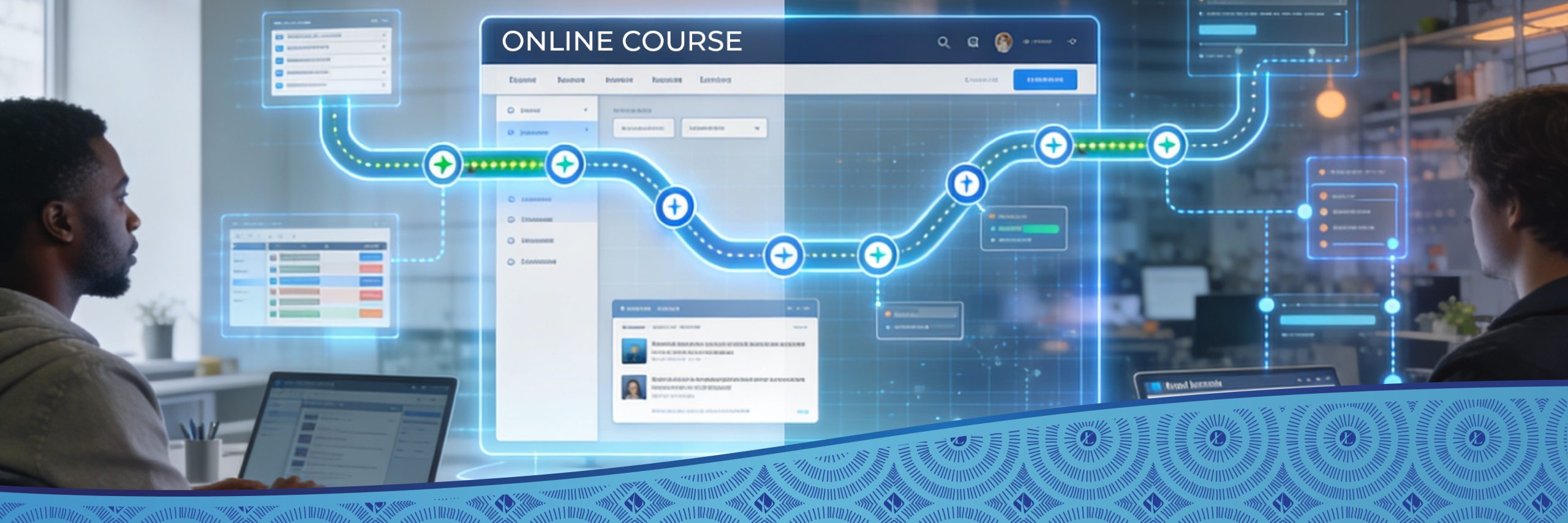
Same dashboard, same welcome screen. One clicks straight in and moves through the material with ease. The other pauses, scrolls up and down, clicks around, waiting for a sign to tell them where to begin.
Same course but completely different experience.
What the dashboard doesn’t show you
That gap rarely shows up in your standard reports.
One learner has a stable connection. The other is on data that runs out mid-month, rationing clicks and hoping the next page loads before the signal drops. One has used platforms like this for years; the other hasn’t, and the conventions that feel obvious to a seasoned digital learner are strange to them. One is somewhere quiet, maybe ordering a mocha frappe. The other is stealing forty minutes between the lunch and dinner rush, headphones on, blocking out the noise.
None of this is about ability or motivation. These are everyday human conditions that live outside the LMS, and which mostly go unreported. The good news? We can do plenty about it.
Design for inclusion
 Most courses are built around what feels logical to the designer. That works beautifully for learners who think the same way – and adds unnecessary friction for everyone who doesn’t.
A more inclusive approach reaches all learners. Chunk your content: break those long walls of text into short, bite-size pieces. Add clear navigation that tells people where to go, what to click, and what’s next. Keep those signals short and visually distinctive (there’s a reason traffic signs are simple and instant to read!)
Apply the same logic to your course.
And check your assumptions about prior knowledge. I once ran hybrid training in Ethiopia and added stop signs to show learners where to pause and complete an in-person activity. No one stopped. Not one person. I was baffled — until I learned that stop signs aren’t commonly used where we were. My assumption about what they’d “obviously” know was the very thing causing the confusion.
Let the tools do some of the work
Platforms like Moodle help you see past logins and completion rates. Activity Completion and Participation Reports show where learners are engaging confidently and where they’re stuck. Logs go deeper to show what learners accessed, when, for how long, and how often they came back. If people keep revisiting a page without progressing, that’s not low motivation; that’s usually a design problem. These patterns surface usability issues that would otherwise stay hidden, and give you evidence to act on it.
The take-away
Two learners can finish the same course and earn the same certificate, yet have totally different learning journeys. One engaged with the content; the other spent their energy figuring out where to go. The content wasn’t the obstacle, but the learning path became the challenge.
Designing for inclusion means thinking beyond what we teach, and asking how easy it is for someone to begin, and to keep going.
Everyone may be online but that doesn’t mean everyone’s learning the same way. Our job is to build the environment where learning reaches everyone who needs it.
Want to explore how this could work in your organisation? Book a conversation with us.
By Dr Isabel Tarling