



15 Jun Learning on Fast and Fragmented Days: How LMS Design Can Support FaF Learning
With eight minutes before her to spare, she opens her phone, finds the compliance course she’s been meaning to finish for two weeks, watches four minutes of a video, and closes it when the client comes around the corner. ‘I’ll come back to it later’, she thinks. She always means to.
Three days later, she reopens the course. The progress indicator is vague, and she can’t remember exactly where she left off. The module feels longer than she remembered, and there seems to be far more tasks to do now. With her to-do list already a page long, she closes the course again, this time with a small but familiar sense of defeat.
Lindy isn’t a distracted employee. She’s having to use a learning system that wasn’t designed for the fast and fragmented (FaF) life she’s actually living, and the work demands she navigates every day.
Understanding the Interrupted Learner
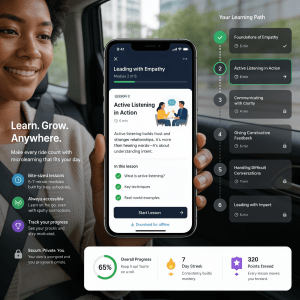 Learning design often assumes that learners would sit down at a desk, clear their mental decks, and work through a course with sustained focus. Instead, for most people today, work and general life are relentlessly fragmented. Notifications, context switches, back-to-back meetings, and the domestic responsibilities that bleed into working hours. It all translates into scarce attention and limited focus.
Online courses have to compete for attention like everything else, and this starts with a heavy dose of introspection. It starts with realising that the uninterrupted learner was always a mythical character from fiction and folklore, far more urban legend than reality. Whether learning is on a device, from a book, or through other means, interruptions and fragmented attention are nothing new. (The squirrels are real!)
It also means understanding learners’ priorities better. Very few learners can find an uninterrupted hour, so they prioritise learning along with everything else. This is not a problem with their priorities but a reality that learning often ends up happening in the margins – a few minutes on a commute, half a video during lunch, or a quick quiz between calls, making the most of the time that is available.
Learning designers who design for the Return-and-Reorientate or R’nR Friction intentionally design learning that is optimised for shorter attention spans, squirrelling minds and competing priorities. It requires thinking differently about what a course is for. Instead of a single long experience demanding sustained attention, it becomes a series of short, self-contained units where each unit is completable in a spare moment, and each one is clearly connected to what comes before and after. Progress is visible and specific, and the next step is always obvious. Returning after three days feels like picking up a book at a bookmark, not arriving late to a lecture.
Moodle LMS platforms already include many of the tools to make this possible. Completion tracking, structured navigation, mobile-friendly layouts, and activities that track where learners left off are native to the course code. Using these tools is up to the learning designer. It requires intentionality to design learning that fits into a fragmented day, or to require sustained focused attention of learners that they cannot reliably deliver.
Back to Lindy, Waiting for a New Client
Lindy has 11 minutes as she waits for the next client. She opens her course and finds she’s exactly where she left off. There’s one short activity remaining in this section. From the course intro, she knows that each MicroLesson takes about 7 minutes. She completes the current lesson, sees her progress update, and starts the next one. As she finishes the new MicroLesson, her client walks out to meet her.
Learning in MicroLessons works well for her, and more importantly, each lesson brings her closer to DONE, and that’s worth celebrating!
Limina builds Moodle LMSs and does learning design for organisations where learners are busy, connections are inconsistent, and training needs to work around real life. Get in touch if you’d like to learn more about our fully managed LMSs.
Book a 30-minute conversation, and we’ll get back to you.
By Dr Isabel Tarling